PrimeGreen insights

Blogs on carbon data, tenders and AI.

Practical PrimeGreen guidance for SMEs preparing stronger sustainability tender responses.

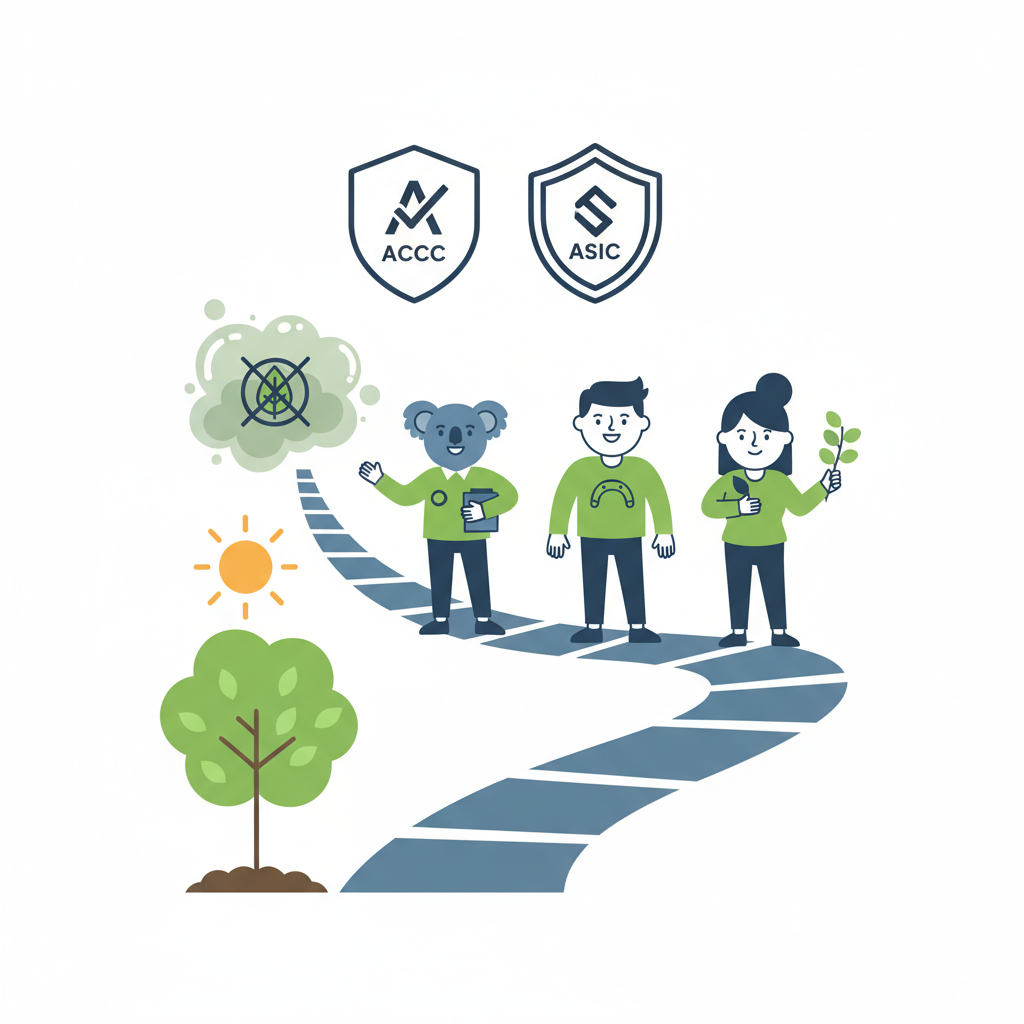
Beyond Greenwashing: Ensuring Regulatory Integrity in Your Carbon Reporting
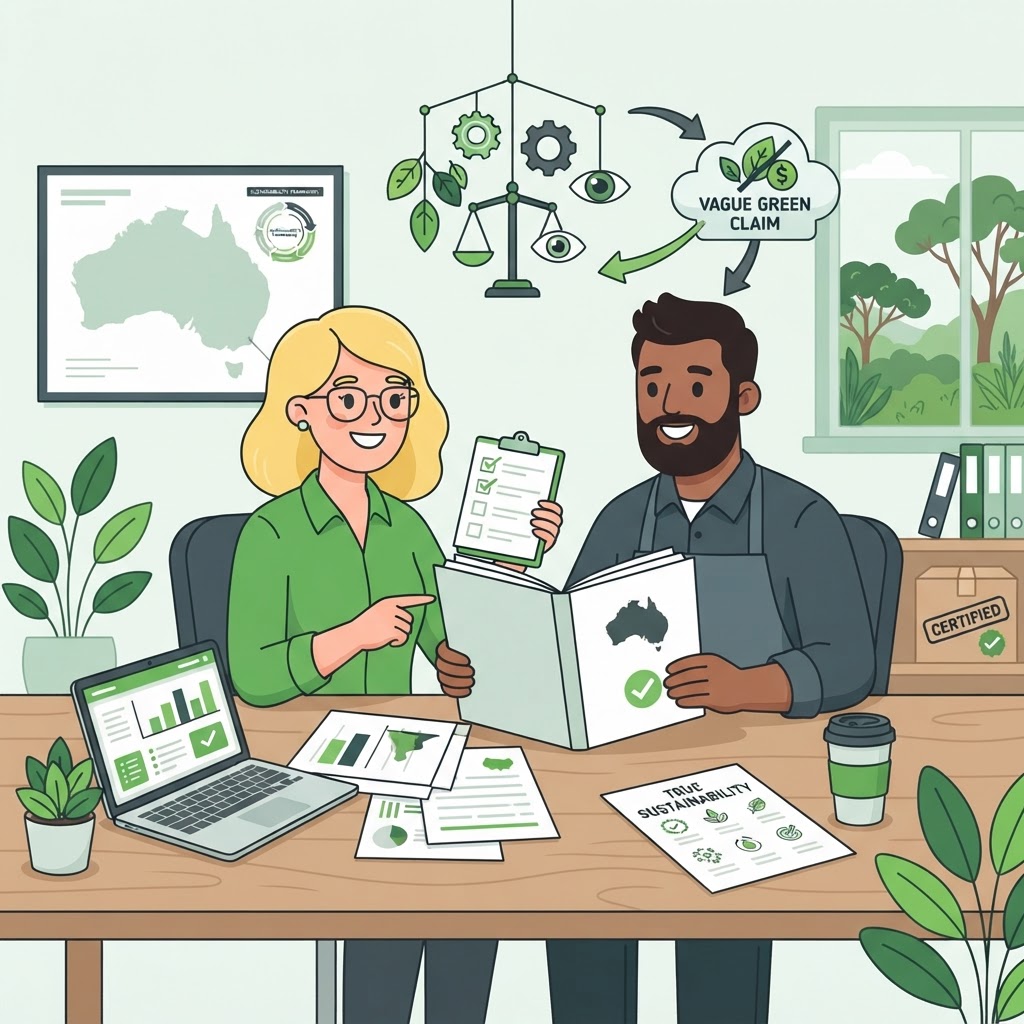
Greenwashing
15 August 2026

Beyond Greenwashing: Ensuring Regulatory Integrity in Your Carbon Reporting

Learn how Australian SMEs can navigate ACCC and ASIC guidelines to produce evidence-backed sustainability tender responses that stand up to regulatory scrutiny.

Read blog
Evidence-Backed Bidding: Mastering Your Carbon Data Trail for Australian Tenders
Tender readiness
14 August 2026

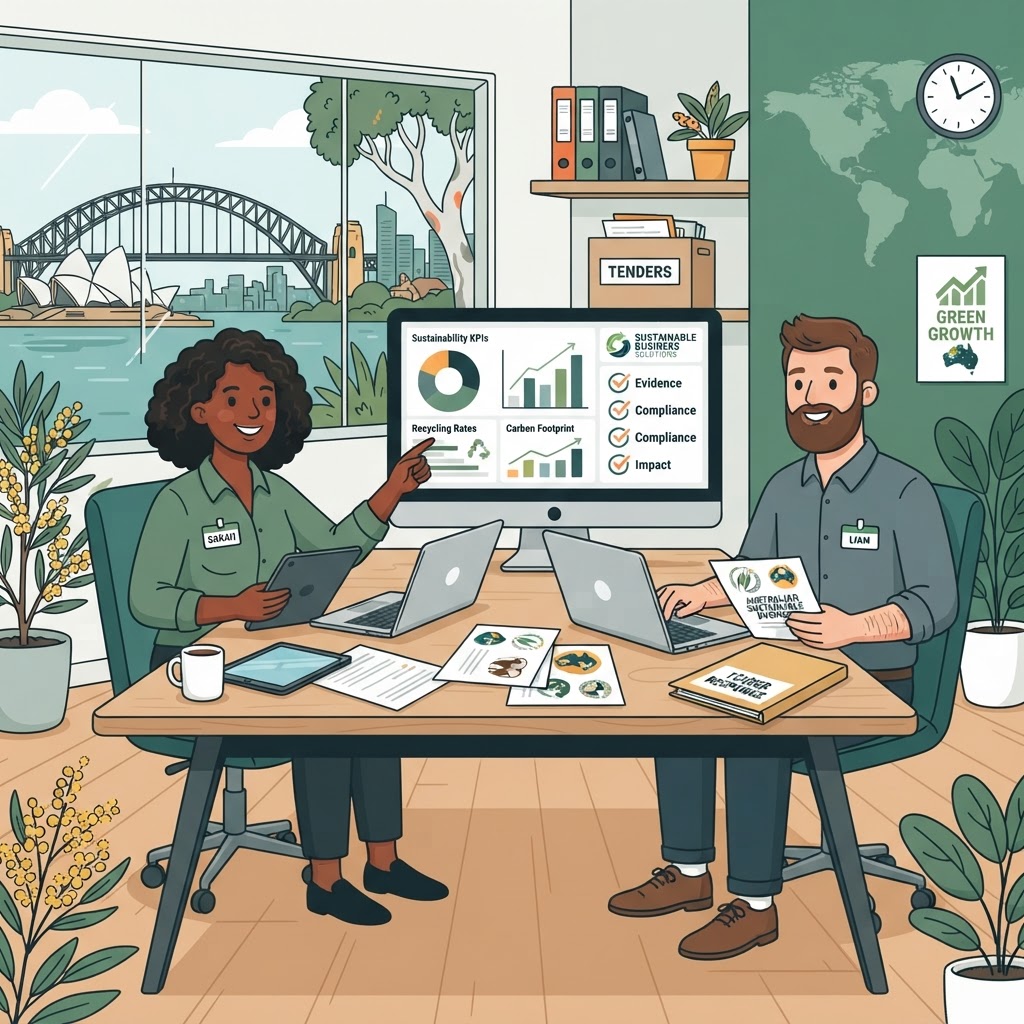
Evidence-Backed Bidding: Mastering Your Carbon Data Trail for Australian Tenders

Learn how Australian SMEs can build trust with enterprise buyers by transforming raw data into verified, evidence-backed sustainability tender responses.

Read blog
Carbon Literacy for SMEs: Navigating Scope 1, 2, and 3 for Tenders
Carbon basics
13 August 2026

Carbon Literacy for SMEs: Navigating Scope 1, 2, and 3 for Tenders

Demystify the complexities of Scope 1, 2, and 3 emissions to sharpen your sustainability tender responses and meet Australian procurement requirements.

Read blog
AASB S2 and the Supply Chain: What Australian SMEs Must Know for Tenders
Compliance
12 August 2026

AASB S2 and the Supply Chain: What Australian SMEs Must Know for Tenders

Discover how the AASB S2 climate reporting standards are filtering down to Australian SMEs and how to prepare your data for procurement success.

Read blog
Beyond the Scorecard: How Major Buyers Audit Your Sustainability Claims
Procurement
11 August 2026

Beyond the Scorecard: How Major Buyers Audit Your Sustainability Claims

Discover how major Australian enterprise buyers evaluate supplier sustainability and what evidence you need to secure your next contract.

Read blog
Precision Reporting: Applying National Greenhouse Accounts Factors to Australian Tenders
Emissions reporting
10 August 2026

Precision Reporting: Applying National Greenhouse Accounts Factors to Australian Tenders

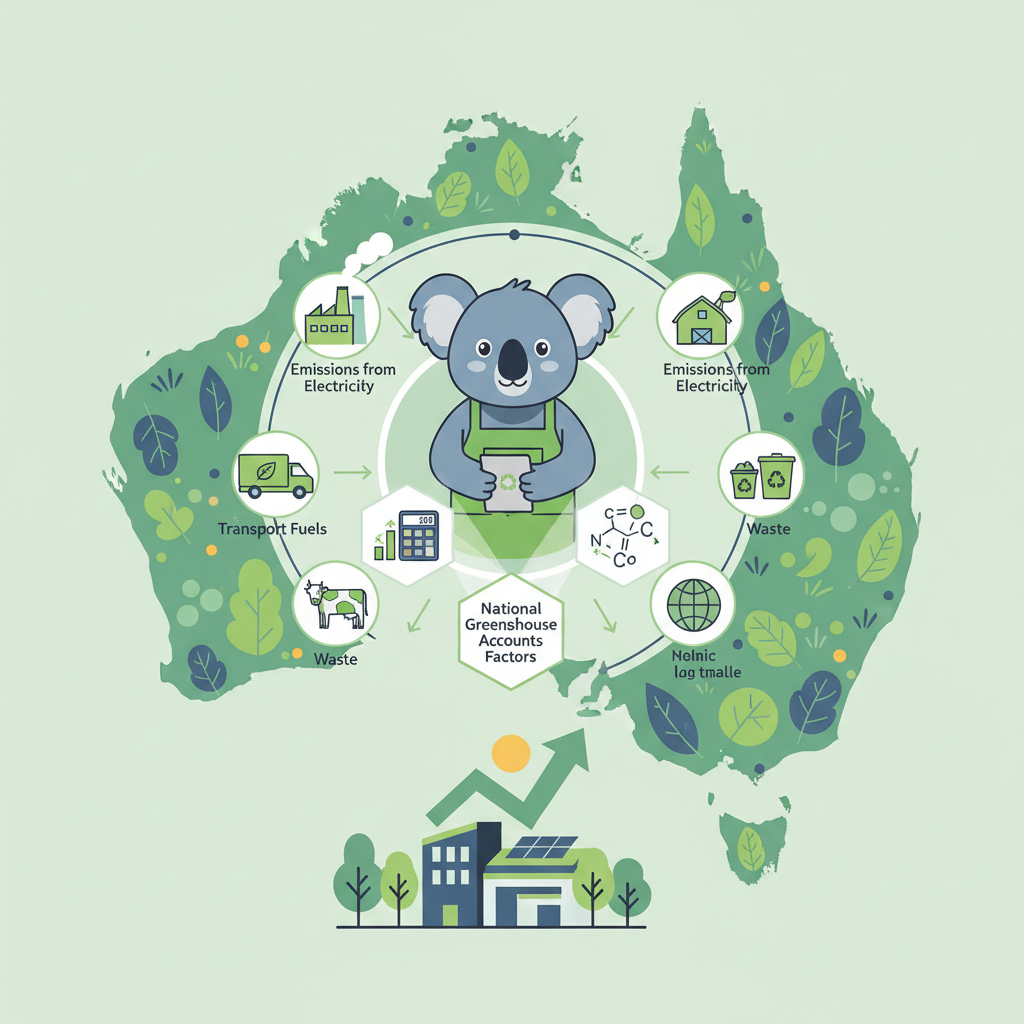
Learn how to use official National Greenhouse Accounts factors to build audit-ready emissions data for competitive Australian sustainability tenders.

Read blog
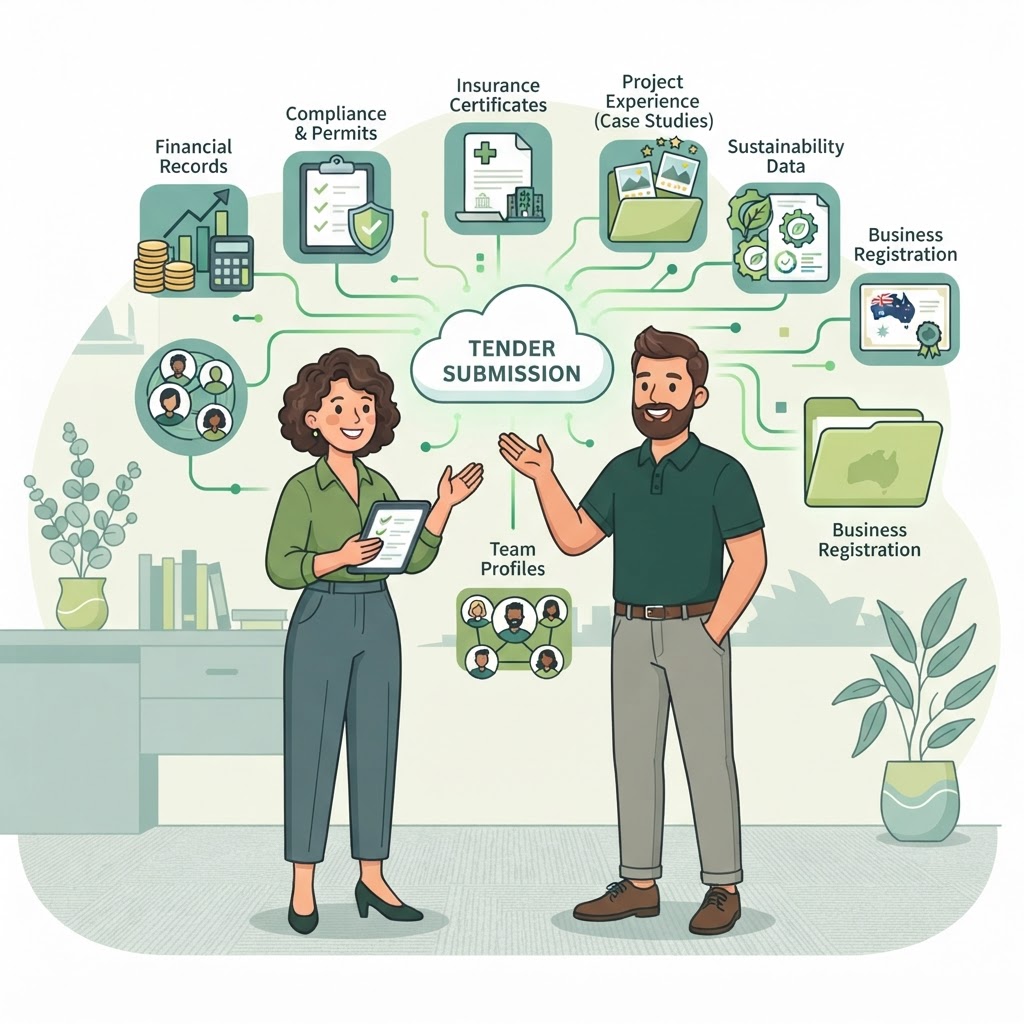
The Pre-Bid Data Pack: What Australian SMEs Need Before Responding to Sustainability Tenders
Tender checklist
9 August 2026

The Pre-Bid Data Pack: What Australian SMEs Need Before Responding to Sustainability Tenders

Streamline your next procurement bid by preparing the essential carbon documentation and data evidence required by enterprise buyers.

Read blog
Regulatory Integrity: Avoiding Greenwashing Claims in Australian Tenders
Greenwashing
8 August 2026

Regulatory Integrity: Avoiding Greenwashing Claims in Australian Tenders

Learn how Australian SMEs can safeguard their reputation and win contracts by aligning sustainability reporting with ACCC and ASIC expectations.

Read blog
Winning the Contract: The Data Audit Trail for Sustainable Tenders
Tender readiness
7 August 2026

Winning the Contract: The Data Audit Trail for Sustainable Tenders

Discover how Australian SMEs can build a rigorous, evidence-backed foundation for sustainability tenders by mastering data integrity and reporting transparency.

Read blog
Demystifying Emissions: A Practical Guide for Australian SME Carbon Reporting
Carbon basics
6 August 2026

Demystifying Emissions: A Practical Guide for Australian SME Carbon Reporting

Navigating the complexities of Scope 1, 2, and 3 emissions is essential for Australian SMEs looking to win procurement contracts through credible sustainability reporting.

Read blog
AASB S2: The New Standard for Australian SME Carbon Reporting
Compliance
5 August 2026

AASB S2: The New Standard for Australian SME Carbon Reporting

Discover how the AASB S2 climate disclosure standards impact Australian SMEs and why precision in carbon accounting is now a prerequisite for winning government and enterprise contracts.

Read blog
The Supplier Audit: How Enterprise Buyers Verify Your Sustainability Data
Procurement
4 August 2026

The Supplier Audit: How Enterprise Buyers Verify Your Sustainability Data

Discover the rigorous validation methods major Australian buyers use to audit SME sustainability claims and how you can prepare to pass.

Read blog
Mastering NGA Factors: Precision Emissions Reporting for Australian SMEs
Emissions reporting
3 August 2026

Mastering NGA Factors: Precision Emissions Reporting for Australian SMEs

Learn how Australian SMEs can leverage National Greenhouse Accounts factors to build audit-ready, evidence-based emissions reports for high-value tenders.

Read blog
Tender Readiness: The Essential Data SME Owners Need Before Applying
Tender checklist
2 August 2026

Tender Readiness: The Essential Data SME Owners Need Before Applying

Preparing for a sustainability tender requires more than just good intentions; it demands an evidence-based repository of carbon data and operational documentation.

Read blog
Beyond Buzzwords: How Australian SMEs Can Avoid Greenwashing in Sustainability Tenders
Greenwashing
1 August 2026

Beyond Buzzwords: How Australian SMEs Can Avoid Greenwashing in Sustainability Tenders

Learn how Australian SMEs can safeguard their procurement bids against greenwashing accusations by aligning carbon accounting with ACCC and ASIC expectations.

Read blog
Evidence-Led Bidding: Turning Sustainability Data into Procurement Wins
Tender readiness
31 July 2026

Evidence-Led Bidding: Turning Sustainability Data into Procurement Wins

Learn how Australian SMEs can transform their emissions data into a competitive advantage to secure major government and enterprise contracts.

Read blog
Deciphering Your Carbon Footprint: A Guide to Scope 1, 2, and 3 for Australian SMEs
Carbon basics
30 July 2026

Deciphering Your Carbon Footprint: A Guide to Scope 1, 2, and 3 for Australian SMEs

Mastering the complexities of Scope 1, 2, and 3 emissions is no longer optional for Australian SMEs looking to secure major contracts in an increasingly sustainability-conscious market.

Read blog
AASB S2 and the SME Supply Chain: Why Your Carbon Data Now Matters for Bids
Compliance
29 July 2026

AASB S2 and the SME Supply Chain: Why Your Carbon Data Now Matters for Bids

While AASB S2 primarily targets large entities, the ripple effect on Australian SMEs means that precise emissions reporting is now a non-negotiable requirement for winning major supply chain contracts.

Read blog
The Procurement Scorecard: How Major Buyers Validate Your Sustainability Claims
Procurement
28 July 2026

The Procurement Scorecard: How Major Buyers Validate Your Sustainability Claims

Discover the rigorous criteria Australian enterprise buyers use to assess SME sustainability credentials and how to ensure your carbon data stands up to scrutiny.

Read blog
Calculating Carbon: Leveraging NGA Factors for Reliable Tender Bids
Emissions reporting
27 July 2026

Calculating Carbon: Leveraging NGA Factors for Reliable Tender Bids

Discover how Australian SMEs can use the latest National Greenhouse Accounts factors to build credible, evidence-backed sustainability tender responses.

Read blog
Before You Bid: The Data Documentation Checklist for Sustainable Tenders
Tender checklist
26 July 2026

Before You Bid: The Data Documentation Checklist for Sustainable Tenders

Streamline your next tender submission by gathering the essential carbon data and evidence-backed documentation Australian SMEs need to win.

Read blog
Beyond Greenwashing: Ensuring Integrity in Australian SME Sustainability Tenders
Greenwashing
25 July 2026

Beyond Greenwashing: Ensuring Integrity in Australian SME Sustainability Tenders

Learn how Australian SMEs can align with ACCC and ASIC expectations by building evidence-backed sustainability tender responses that avoid greenwashing pitfalls.

Read blog
From Carbon Data to Contract Wins: A Practical Guide to Sustainability Tender Success for Australian SMEs
Tender readiness
24 July 2026

From Carbon Data to Contract Wins: A Practical Guide to Sustainability Tender Success for Australian SMEs

Elevate your Australian SME's tender competitiveness by mastering the art of crafting evidence-backed sustainability responses, moving beyond claims to verifiable impact.

Read blog
Unlocking Scope 1, 2, and 3: A Strategic Foundation for Australian SME Tenders
Carbon basics
23 July 2026

Unlocking Scope 1, 2, and 3: A Strategic Foundation for Australian SME Tenders

Learn how to demystify carbon classifications to build accurate, defensible sustainability reports that help your SME win more procurement contracts.

Read blog
AASB S2 and the SME Supply Chain: Preparing for New Disclosure Realities
Compliance
22 July 2026

AASB S2 and the SME Supply Chain: Preparing for New Disclosure Realities

While AASB S2 targets large entities, Australian SMEs are feeling the ripple effects as major buyers now demand high-integrity climate data.

Read blog
Winning the RFP: Decoding How Enterprise Buyers Evaluate SME Sustainability
Procurement
21 July 2026

Winning the RFP: Decoding How Enterprise Buyers Evaluate SME Sustainability

Discover the precise criteria major Australian buyers use to vet SME sustainability claims and how to turn your carbon accounting data into a competitive tender advantage.

Read blog
Demystifying NGA Factors: A Roadmap for Accurate SME Emissions Reporting
Emissions reporting
20 July 2026

Demystifying NGA Factors: A Roadmap for Accurate SME Emissions Reporting

Learn how Australian SMEs can leverage National Greenhouse Accounts factors to build ironclad, evidence-backed sustainability tender responses.

Read blog
The Pre-Tender Audit: Essential Data for Sustainability Bids
Tender checklist
19 July 2026

The Pre-Tender Audit: Essential Data for Sustainability Bids

Prepare your SME for competitive procurement by auditing your carbon data and documentation before the tender deadline hits.

Read blog
Regulatory Integrity: Safeguarding Your SME Tender Against Greenwashing Claims
Greenwashing
18 July 2026

Regulatory Integrity: Safeguarding Your SME Tender Against Greenwashing Claims

Learn how Australian SMEs can align their sustainability disclosures with ACCC and ASIC expectations to win government and corporate tenders.

Read blog
Evidence-Backed Tenders: How Australian SMEs Can Validate Carbon Claims
Tender readiness
17 July 2026

Evidence-Backed Tenders: How Australian SMEs Can Validate Carbon Claims

Learn how to transform your carbon data into a competitive advantage for Australian procurement tenders by focusing on transparency and verifiable evidence.

Read blog
Mastering the Triple Scope: A Practical Guide to SME Carbon Reporting
Carbon basics
16 July 2026

Mastering the Triple Scope: A Practical Guide to SME Carbon Reporting

Demystify the complexities of Scope 1, 2, and 3 emissions to build competitive, evidence-backed sustainability tender responses for Australian SMEs.

Read blog
AASB S2 Readiness: The New Sustainability Baseline for Australian SMEs
Compliance
15 July 2026

AASB S2 Readiness: The New Sustainability Baseline for Australian SMEs

Discover how the AASB S2 climate disclosure standard creates a ripple effect for Australian SMEs in the procurement supply chain.

Read blog
The Auditor’s Lens: How Major Australian Buyers Vet SME Sustainability
Procurement
14 July 2026

The Auditor’s Lens: How Major Australian Buyers Vet SME Sustainability

Discover how large Australian buyers evaluate SME sustainability claims and how you can prepare evidence-backed tender responses that stand up to scrutiny.

Read blog
Precision in Procurement: Using NGA Factors for Accurate SME Carbon Reporting
Emissions reporting
13 July 2026

Precision in Procurement: Using NGA Factors for Accurate SME Carbon Reporting

Discover how Australian SMEs can leverage National Greenhouse Accounts factors to build audit-ready, evidence-based emissions reports for high-stakes tenders.

Read blog
Data-Driven Bids: The Essential Pre-Tender Checklist for Australian SMEs
Tender checklist
12 July 2026

Data-Driven Bids: The Essential Pre-Tender Checklist for Australian SMEs

Streamline your next tender submission by gathering the precise environmental data required to prove your sustainability claims.

Read blog
Beyond Buzzwords: How Australian SMEs Can Evade Greenwashing Risks in Procurement
Greenwashing
11 July 2026

Beyond Buzzwords: How Australian SMEs Can Evade Greenwashing Risks in Procurement

Learn how Australian SMEs can safeguard their reputation and win tenders by aligning their carbon accounting with ACCC and ASIC expectations.

Read blog
Winning the Contract: Building Evidence-Backed Sustainability Bids
Tender readiness
10 July 2026

Winning the Contract: Building Evidence-Backed Sustainability Bids

Learn how Australian SMEs can leverage precision carbon accounting to transform sustainability tender responses from generic claims into evidence-backed competitive advantages.

Read blog
Carbon Classifications Explained: A Guide to Scope 1, 2, and 3 for Australian SMEs
Carbon basics
9 July 2026

Carbon Classifications Explained: A Guide to Scope 1, 2, and 3 for Australian SMEs

Demystify the complexities of carbon accounting with our breakdown of Scope 1, 2, and 3 emissions tailored for Australian SMEs preparing for sustainability tenders.

Read blog
The Indirect Impact of AASB S2: Preparing SMEs for Tiered Compliance
Compliance
8 July 2026

The Indirect Impact of AASB S2: Preparing SMEs for Tiered Compliance

While AASB S2 primarily targets large entities, Australian SMEs in their supply chains are feeling the pressure to provide high-quality climate data to remain competitive in procurement.

Read blog
Behind the Bid: How Major Australian Buyers Scrutinize SME Sustainability
Procurement
7 July 2026

Behind the Bid: How Major Australian Buyers Scrutinize SME Sustainability

Discover how large Australian buyers evaluate SME sustainability claims and what data you need to win tenders in an era of strict climate scrutiny.

Read blog
Why National Greenhouse Accounts Factors Are the Gold Standard for Australian SME Emissions Reporting
Emissions reporting
6 July 2026

Why National Greenhouse Accounts Factors Are the Gold Standard for Australian SME Emissions Reporting

National Greenhouse Accounts factors provide the regulated methodology Australian SMEs need to produce defensible, evidence-backed emissions data for sustainability tenders.

Read blog
The Sustainability Tender File: What Australian SMEs Must Gather Before Bidding
Tender checklist
5 July 2026

The Sustainability Tender File: What Australian SMEs Must Gather Before Bidding

Australian SMEs can win more sustainability tenders by pre-assembling an evidence file of emissions data, methodology statements, and governance records.

Read blog
Ensuring Authentic Sustainability: Avoiding Greenwashing in Australia
Greenwashing
4 July 2026

Ensuring Authentic Sustainability: Avoiding Greenwashing in Australia

Discover strategies for Australian SMEs to avoid greenwashing and ensure compliance in sustainability initiatives.

Read blog
Crafting Compelling Sustainability Tender Responses for SMEs
Tender readiness
3 July 2026

Crafting Compelling Sustainability Tender Responses for SMEs

Empower your small business with evidence-backed sustainability tender responses that shine in competitive procurement processes.

Read blog
Decoding Emissions: A Practical Guide for Australian SMEs
Carbon basics
2 July 2026

Decoding Emissions: A Practical Guide for Australian SMEs

Learn how understanding Scope 1, 2, and 3 emissions can enhance sustainability responses for SMEs in Australia.

Read blog
Demystifying AASB S2 Climate Disclosure for Australian SMEs
Compliance
1 July 2026

Demystifying AASB S2 Climate Disclosure for Australian SMEs

Explore how AASB S2 affects Australian SMEs in carbon accounting and sustainability tenders.

Read blog
Evaluating Supplier Sustainability: Insights for SMEs in Australia
Procurement
30 June 2026

Evaluating Supplier Sustainability: Insights for SMEs in Australia

Understanding how large buyers assess sustainability credentials is vital for SMEs aiming for impactful tender responses.

Read blog
Mastering Emissions Calculations: NGA Factors for SMEs
Emissions reporting
29 June 2026

Mastering Emissions Calculations: NGA Factors for SMEs

Learn how Australian SMEs can leverage National Greenhouse Accounts factors to enhance emissions reporting for sustainability tenders.

Read blog
Preparing for Sustainability Tenders: Essential Data for Australian SMEs
Tender checklist
28 June 2026

Preparing for Sustainability Tenders: Essential Data for Australian SMEs

A guide for Australian SMEs on the vital documents and data to collect before responding to sustainability tenders.

Read blog
Avoiding Greenwashing: A Guide for Australian SMEs in Carbon Accounting
Greenwashing
27 June 2026

Avoiding Greenwashing: A Guide for Australian SMEs in Carbon Accounting

Learn how Australian SMEs can meet ACCC and ASIC expectations while avoiding greenwashing in sustainability tenders.

Read blog
Unlocking the Power of Evidence-Backed Sustainability Tender Responses
Tender readiness
26 June 2026

Unlocking the Power of Evidence-Backed Sustainability Tender Responses

A guide for SMEs on crafting evidence-backed sustainability tender responses that meet Australian standards.

Read blog
Understanding Scope 1, 2, and 3 Emissions for Small Businesses
Carbon basics
25 June 2026

Understanding Scope 1, 2, and 3 Emissions for Small Businesses

A guide for Australian SMEs on how to navigate Scope 1, 2, and 3 emissions for effective sustainability reporting.

Read blog
Navigating AASB S2 Climate Disclosure: A Must for Australian SMEs
Compliance
24 June 2026

Navigating AASB S2 Climate Disclosure: A Must for Australian SMEs

Understanding AASB S2 is crucial for Australian SMEs to excel in sustainability tenders.

Read blog
Decoding Supplier Sustainability: Insights for Australian SMEs
Procurement
23 June 2026

Decoding Supplier Sustainability: Insights for Australian SMEs

Discover how large buyers assess sustainability credentials and what SMEs need to know for competitive advantage in procurement.

Read blog
Calculating Emissions with NGA Factors for SMEs in Australia
Emissions reporting
22 June 2026

Calculating Emissions with NGA Factors for SMEs in Australia

Discover how Australian SMEs can accurately calculate emissions using National Greenhouse Accounts factors to enhance sustainability tender responses.

Read blog
Essential Documents to Gather Before a Sustainability Tender
Tender checklist
21 June 2026

Essential Documents to Gather Before a Sustainability Tender

Ensure your SME is prepared for sustainability tenders with this essential document checklist.

Read blog
Ensuring Authenticity: Meeting ACCC and ASIC Standards in Sustainability
Greenwashing
20 June 2026

Ensuring Authenticity: Meeting ACCC and ASIC Standards in Sustainability

Learn how Australian SMEs can avoid greenwashing and adhere to ACCC and ASIC guidelines in sustainability tenders.

Read blog
Mastering Evidence-Backed Sustainability Tender Responses for SMEs
Tender readiness
19 June 2026

Mastering Evidence-Backed Sustainability Tender Responses for SMEs

Learn how Australian SMEs can effectively prepare evidence-backed sustainability tender responses to enhance their procurement outcomes.

Read blog
Navigating Scope 1, 2, and 3 Emissions: A Guide for Australian SMEs
Carbon basics
18 June 2026

Navigating Scope 1, 2, and 3 Emissions: A Guide for Australian SMEs

Unlock the essentials of Scope 1, 2, and 3 emissions and their significance for SMEs in the sustainability tender landscape.

Read blog
Understanding AASB S2 Climate Disclosure: Implications for Australian SMEs
Compliance
17 June 2026

Understanding AASB S2 Climate Disclosure: Implications for Australian SMEs

Explore what AASB S2 climate disclosure means for SMEs navigating sustainability compliance in Australia.

Read blog
Deciphering Your Carbon Footprint: A Guide to Scope 1, 2, and 3 for Australian SMEs
Carbon basics

Deciphering Your Carbon Footprint: A Guide to Scope 1, 2, and 3 for Australian SMEs

Key takeaways
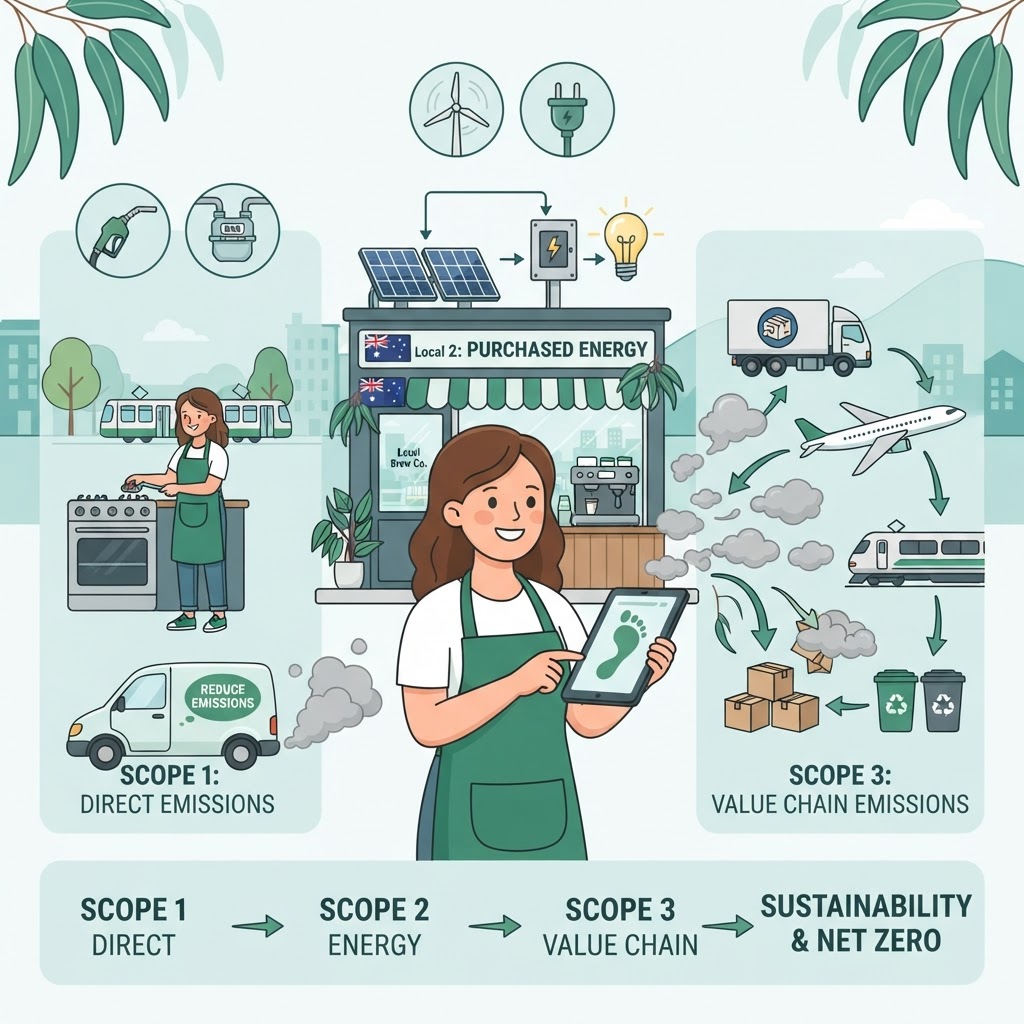
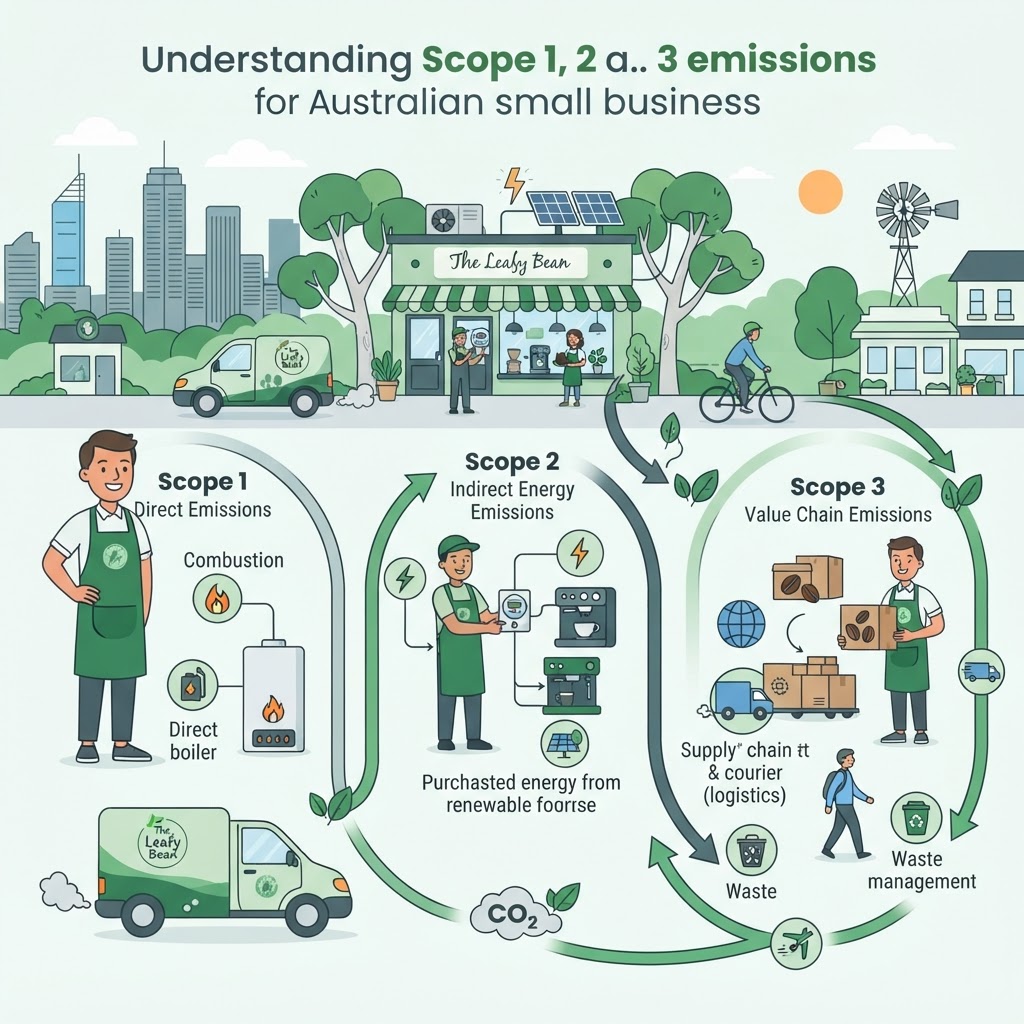
  • Scope 1 covers direct emissions, Scope 2 covers indirect energy emissions, and Scope 3 covers value chain emissions, which often represent the largest portion of an SME's carbon footprint.
  • Using National Greenhouse Accounts (NGA) factors is essential for Australian SMEs to ensure their carbon data is scientifically accurate and audit-ready for procurement.
  • Transparent reporting aligned with ASIC INFO 271 guidance is the most effective way to avoid greenwashing allegations and build trust with enterprise buyers.
  • Automated carbon accounting platforms help SMEs manage the complexity of Scope 3 reporting, turning environmental data into a competitive advantage during the tender process.

For many Australian SMEs, the language of carbon accounting feels like an insurmountable hurdle. Yet, as major enterprise buyers and government bodies tighten procurement requirements, understanding your carbon footprint has become a core business competency. Whether you are preparing for your first sustainability tender or refining your environmental disclosures, moving beyond generic promises requires a technical grasp of the three emission scopes.

Understanding the Basics: Defining Scopes 1, 2, and 3

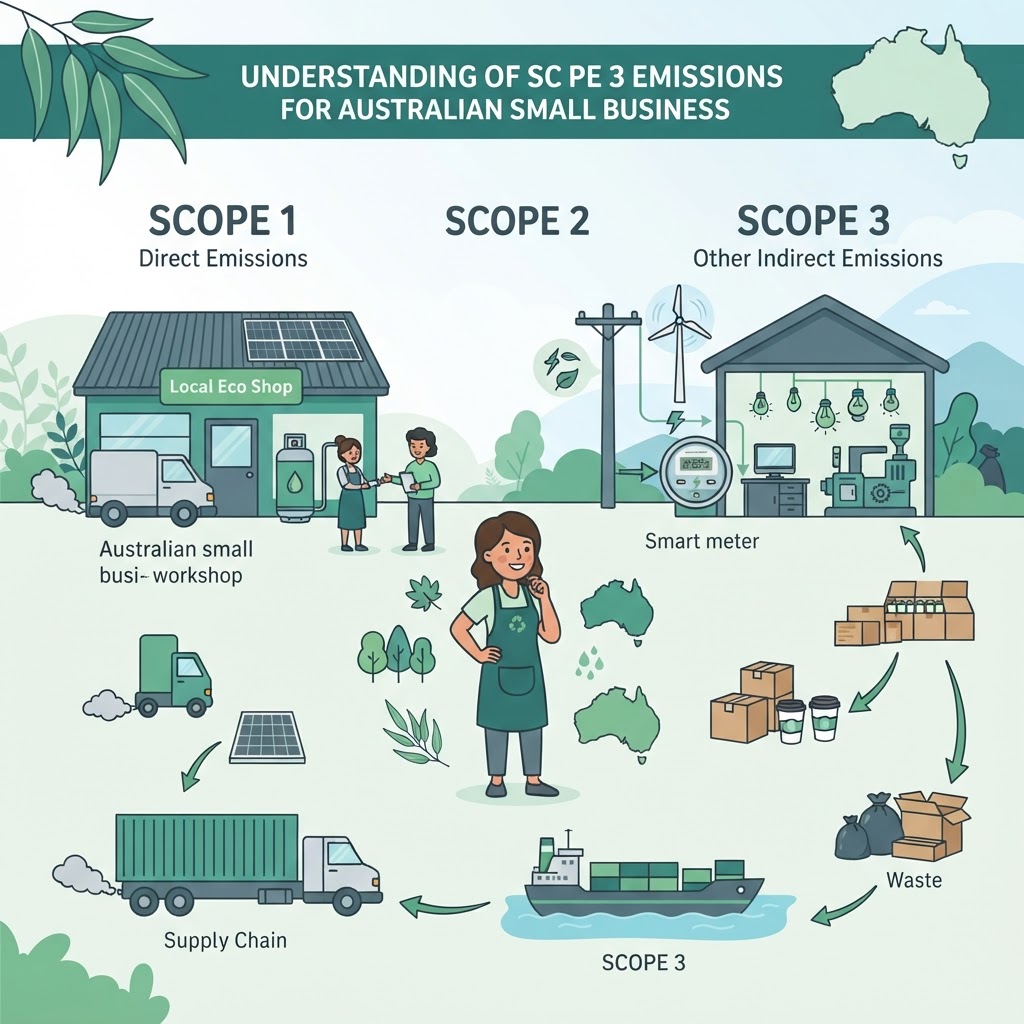
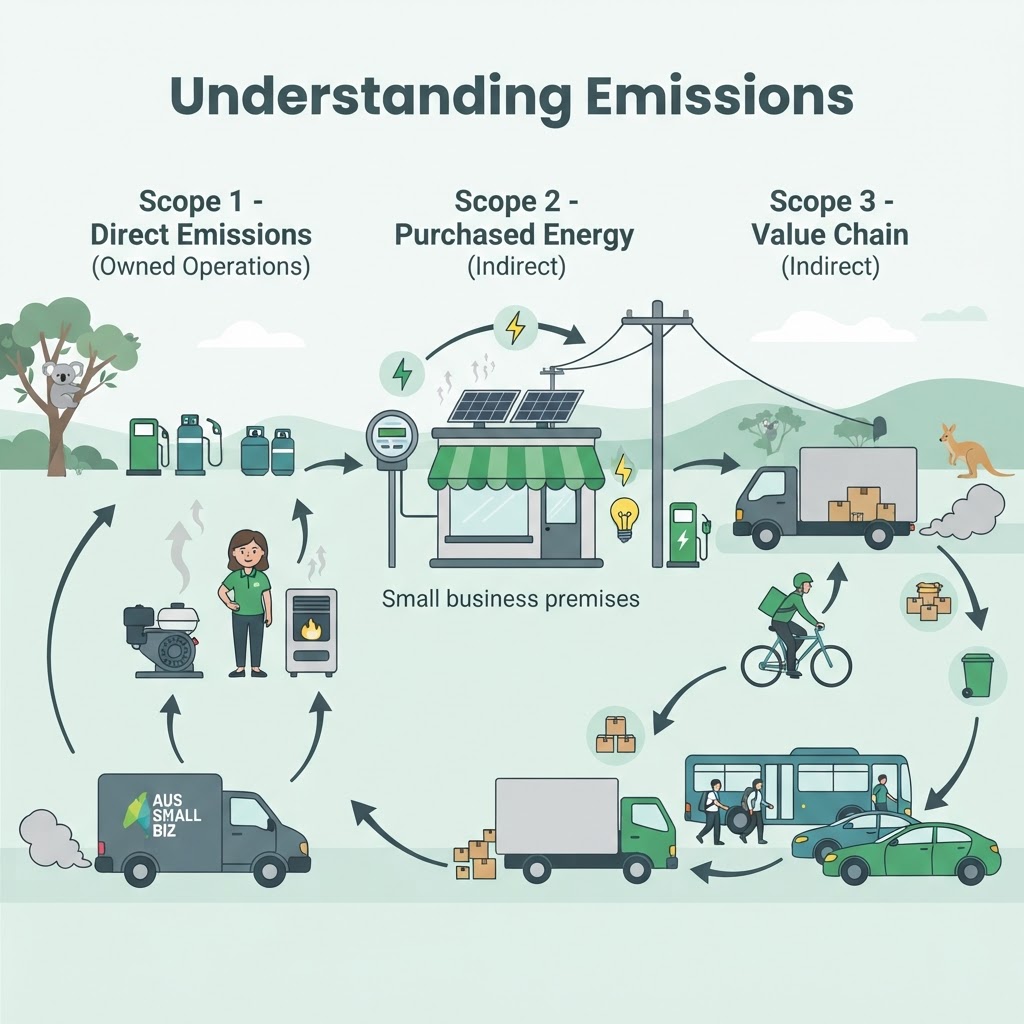
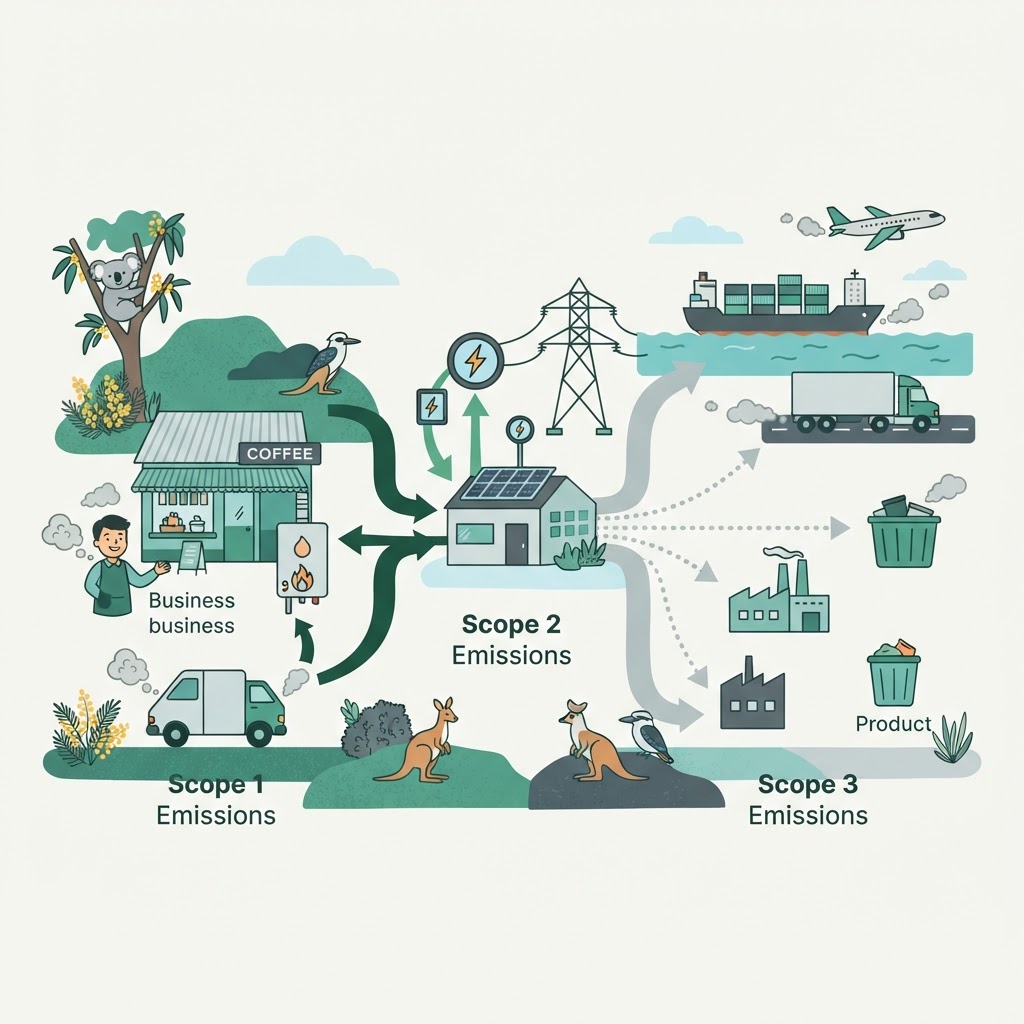
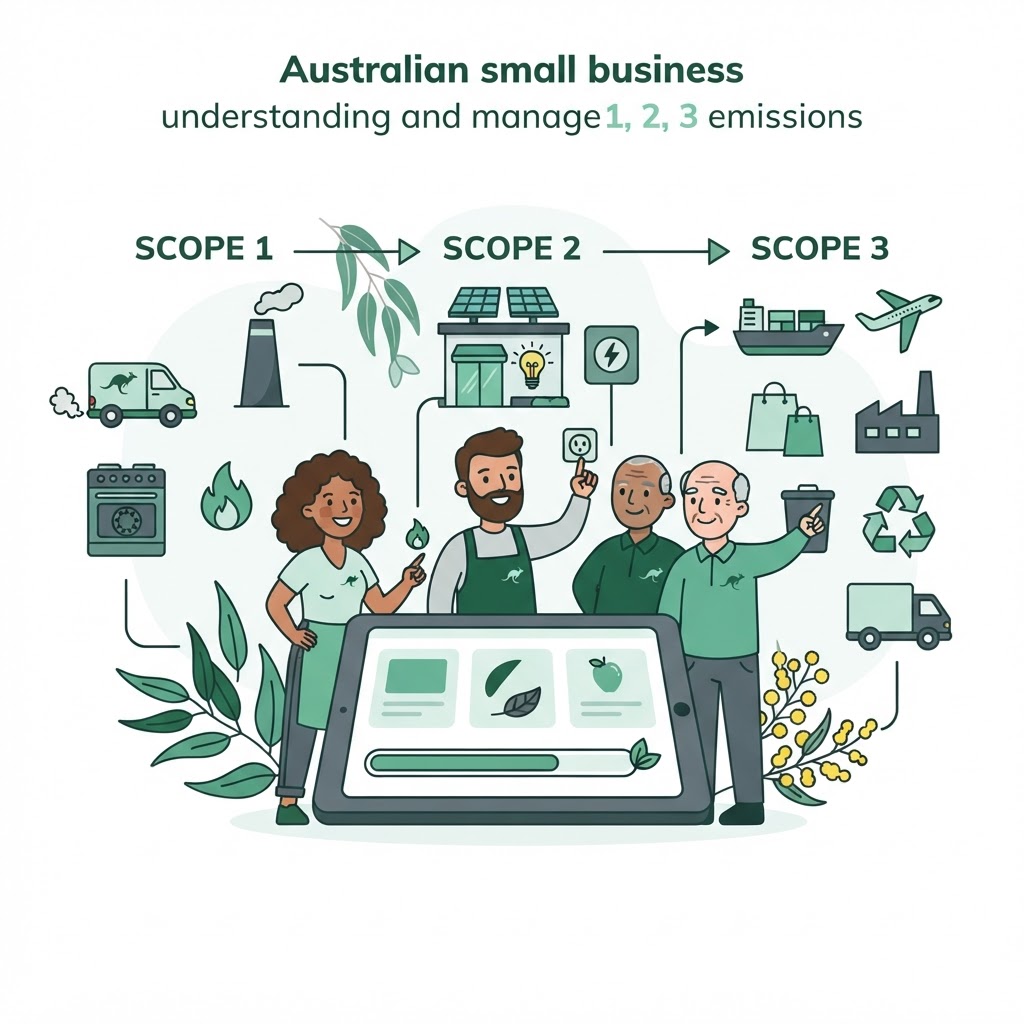
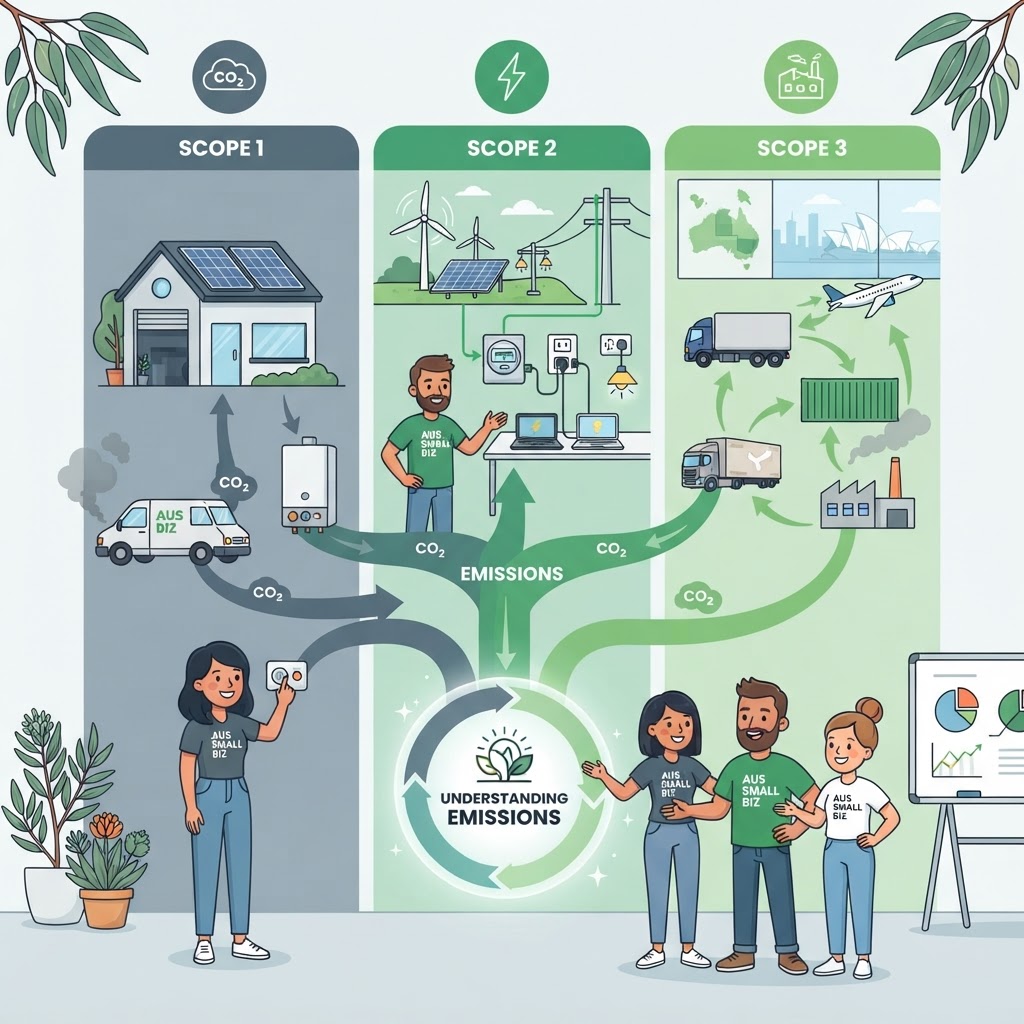
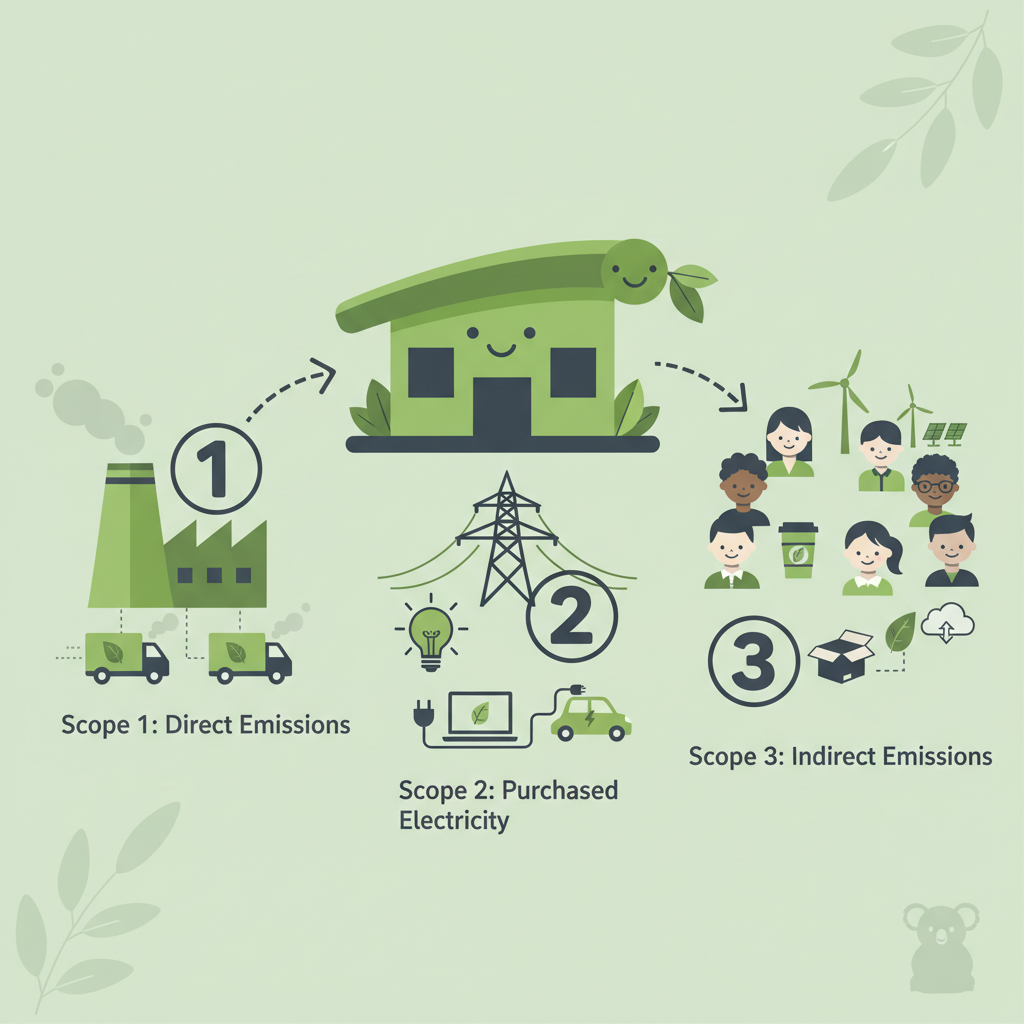
At the heart of credible emissions reporting lies the Greenhouse Gas (GHG) Protocol, which categorises emissions into three distinct buckets. Scope 1 covers direct emissions from sources you own or control, such as company vehicles or on-site gas combustion. Scope 2 accounts for indirect emissions from the generation of purchased electricity, steam, or heating.

Scope 3 is the most significant, yet most complex, category. It encompasses all other indirect emissions in your value chain, including purchased goods, employee commuting, and waste. For most Australian SMEs, Scope 3 accounts for the lion’s share of their footprint, making it the most critical area for long-term reduction strategies.

Why Accurate Carbon Accounting Matters for Procurement

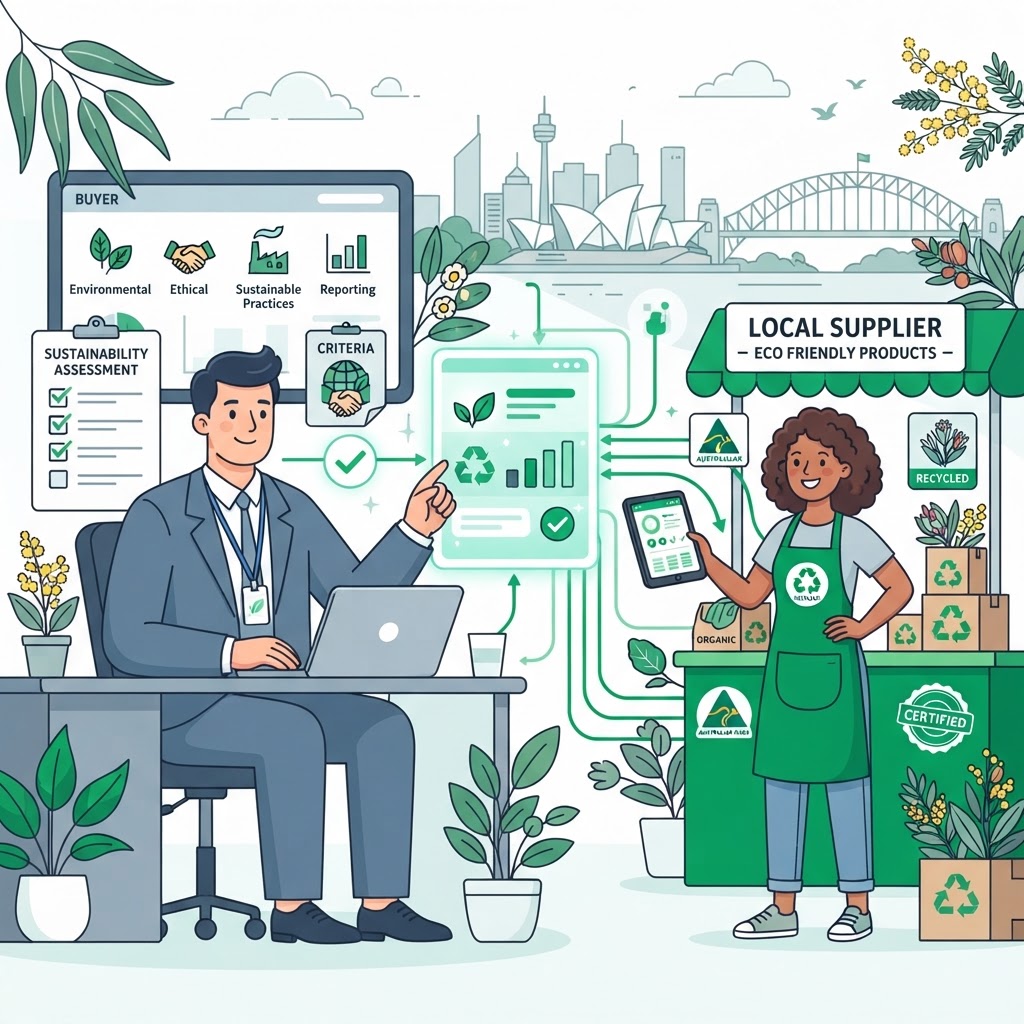
Procurement departments are no longer just looking at price and quality; they are scrutinising environmental performance. With the ACCC increasing its focus on greenwashing, companies are demanding evidence-backed data. If an SME cannot accurately report its Scope 1, 2, and 3 emissions, it risks being excluded from high-value tenders.

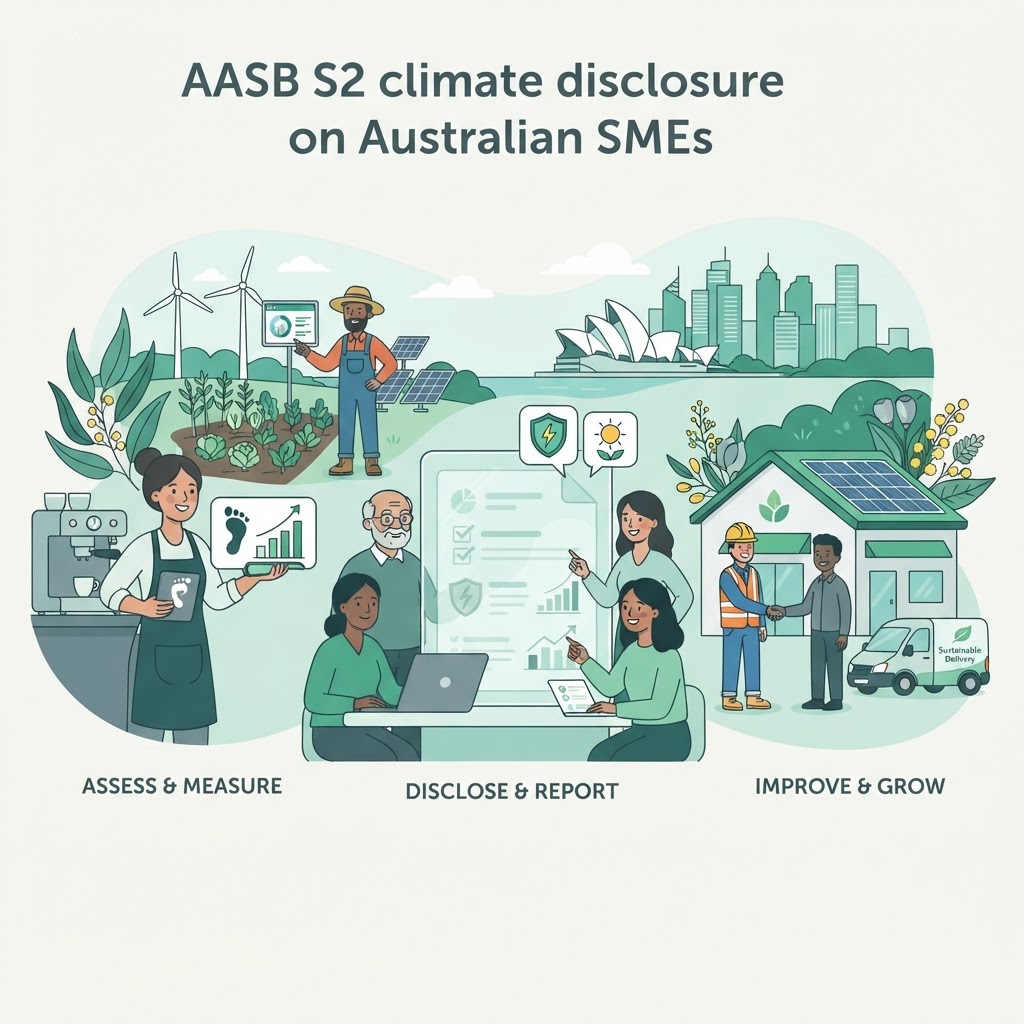
Utilising consistent, verified methodology allows businesses to align with frameworks like AASB S2. When your sustainability tender response is backed by granular data, you transition from being a liability to a preferred partner. Transparency in your reporting demonstrates corporate maturity and mitigates the reputational risks associated with vague environmental claims.

Navigating NGA Factors and Australian Standards

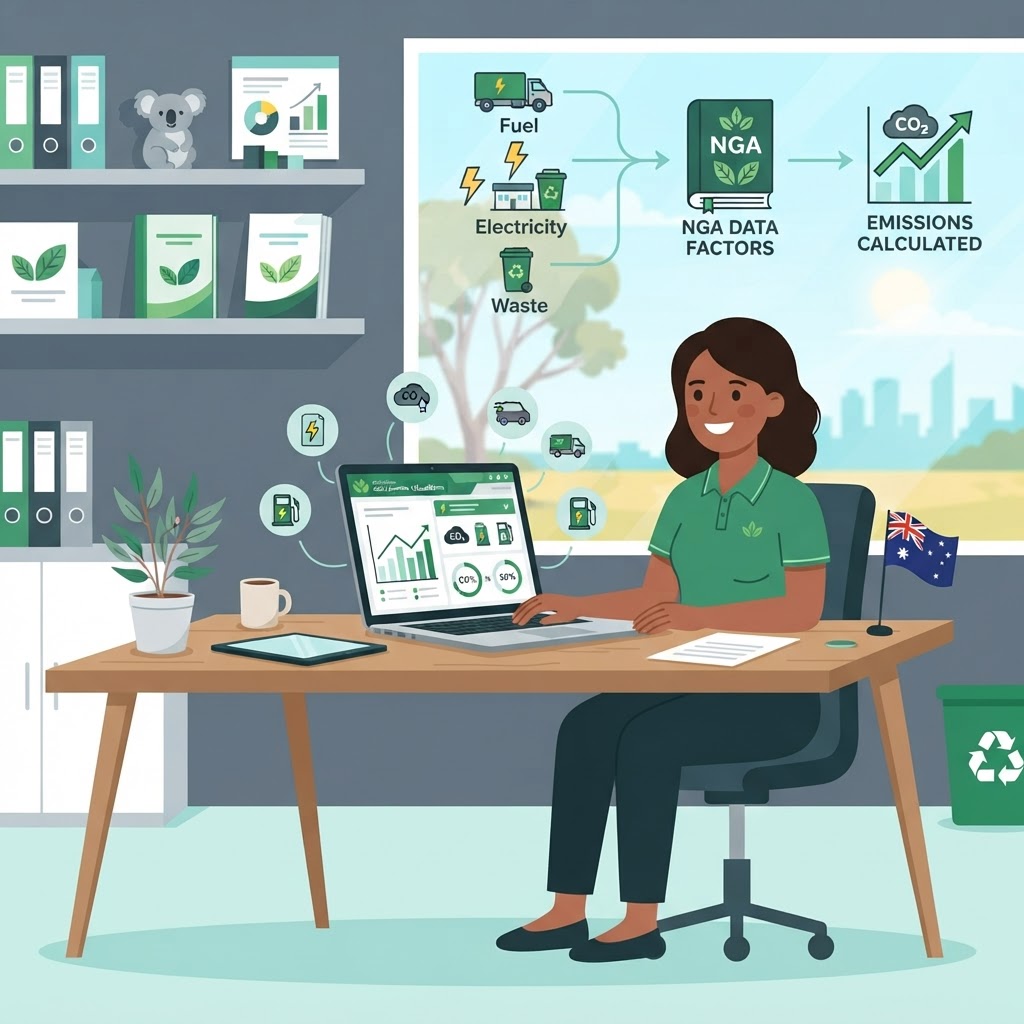
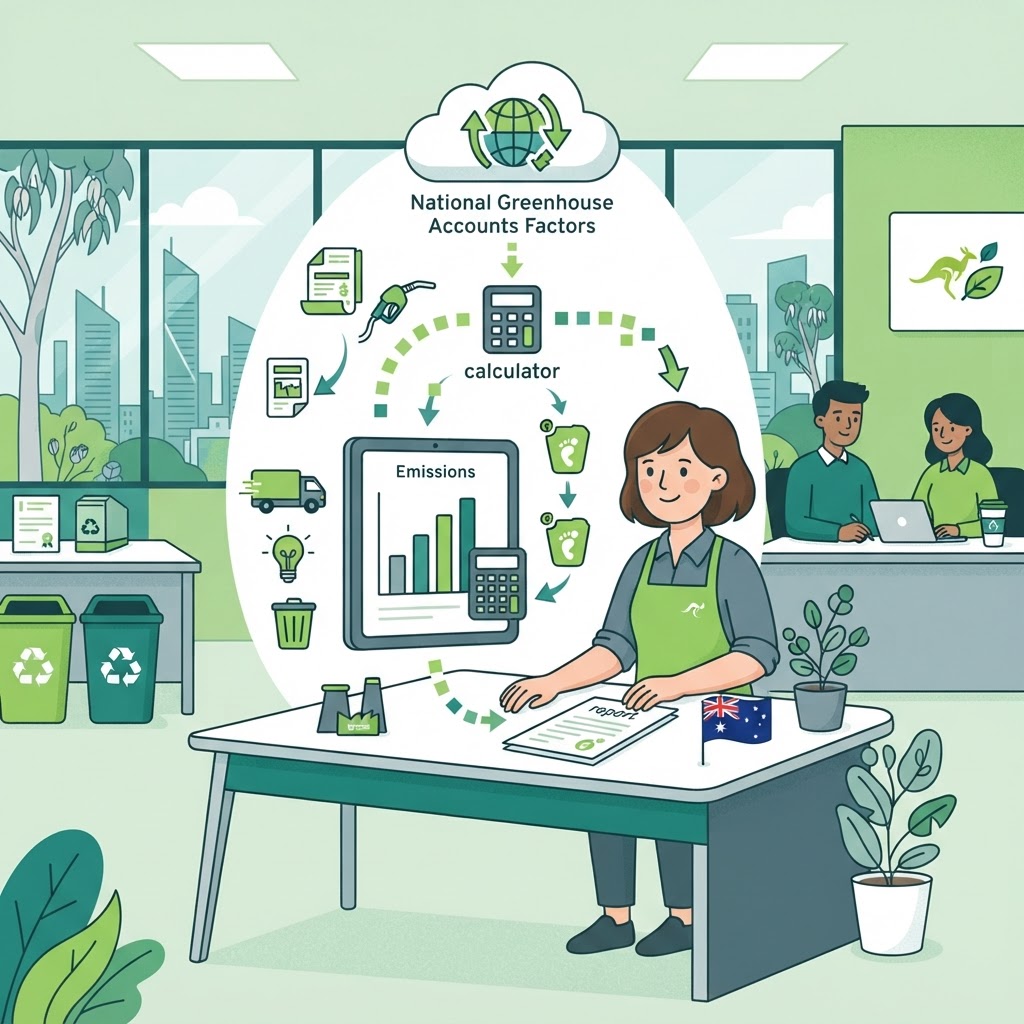
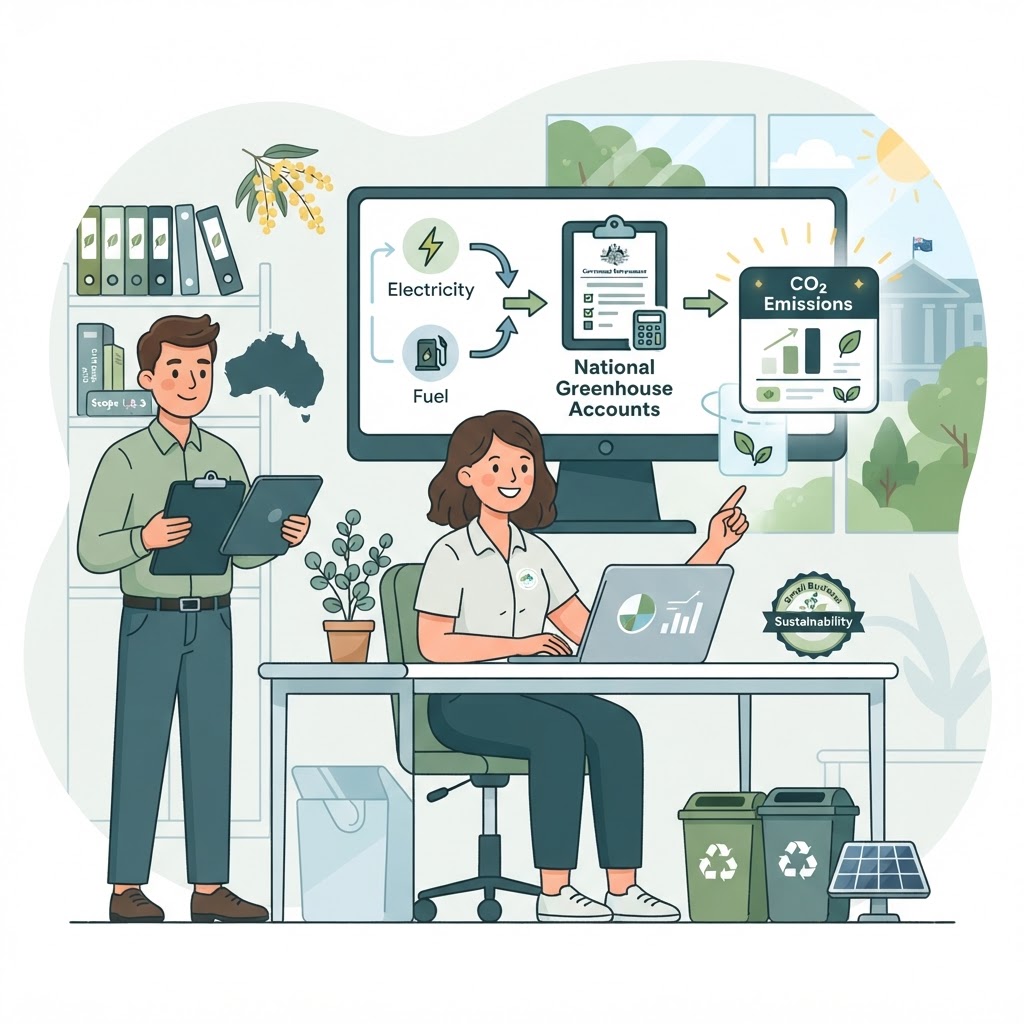
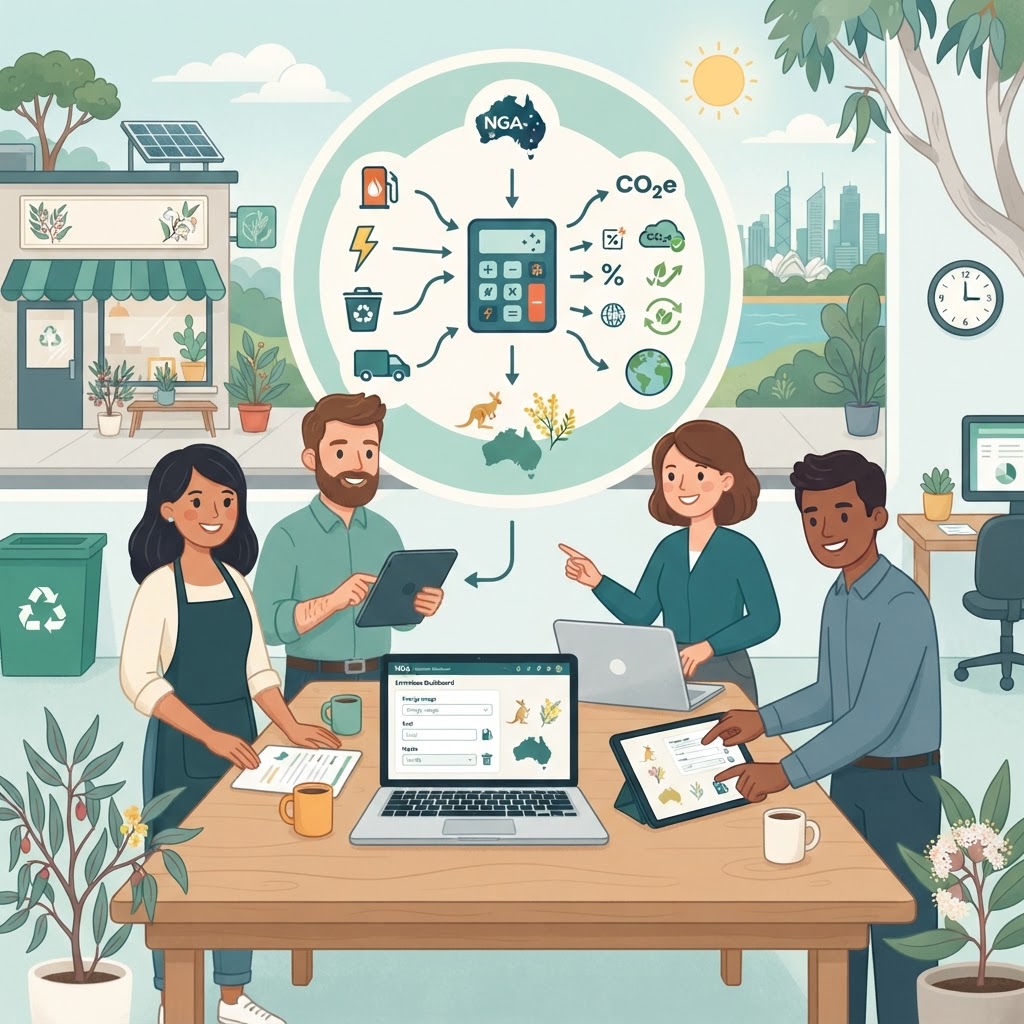
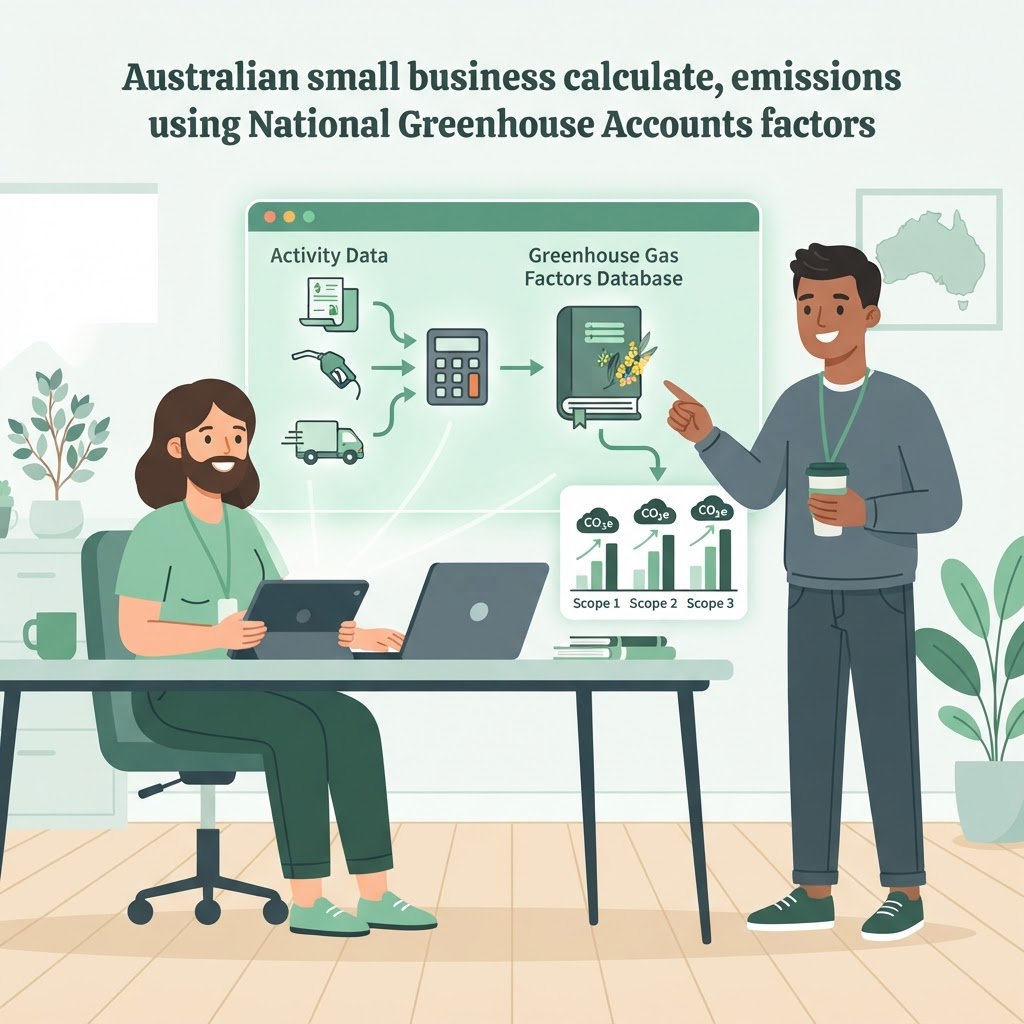
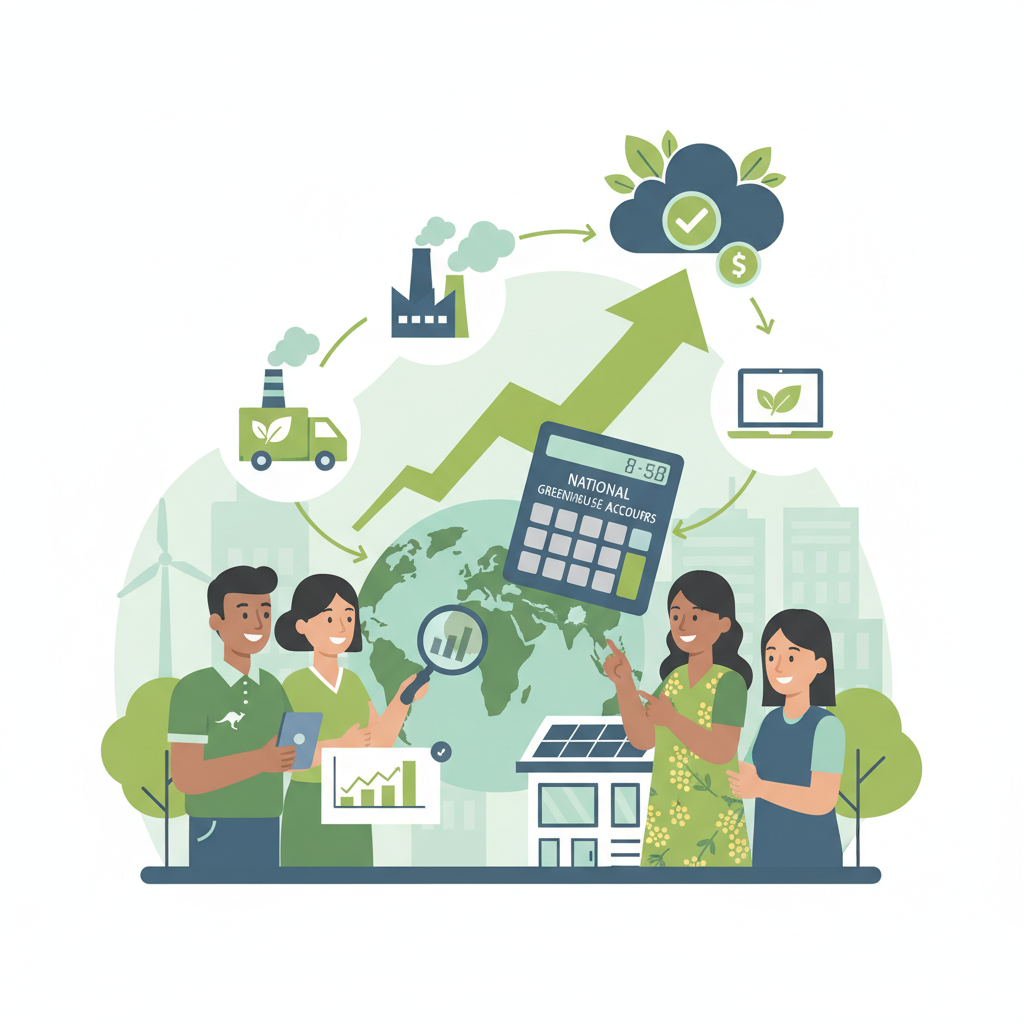
To ensure your emissions data is audit-ready, you must utilise the National Greenhouse Accounts (NGA) factors. These factors provide the scientific basis for converting business activities—like kilowatt-hours of electricity or litres of fuel—into carbon dioxide equivalents. For Australian SMEs, using NGA factors is the gold standard for maintaining integrity in reporting.

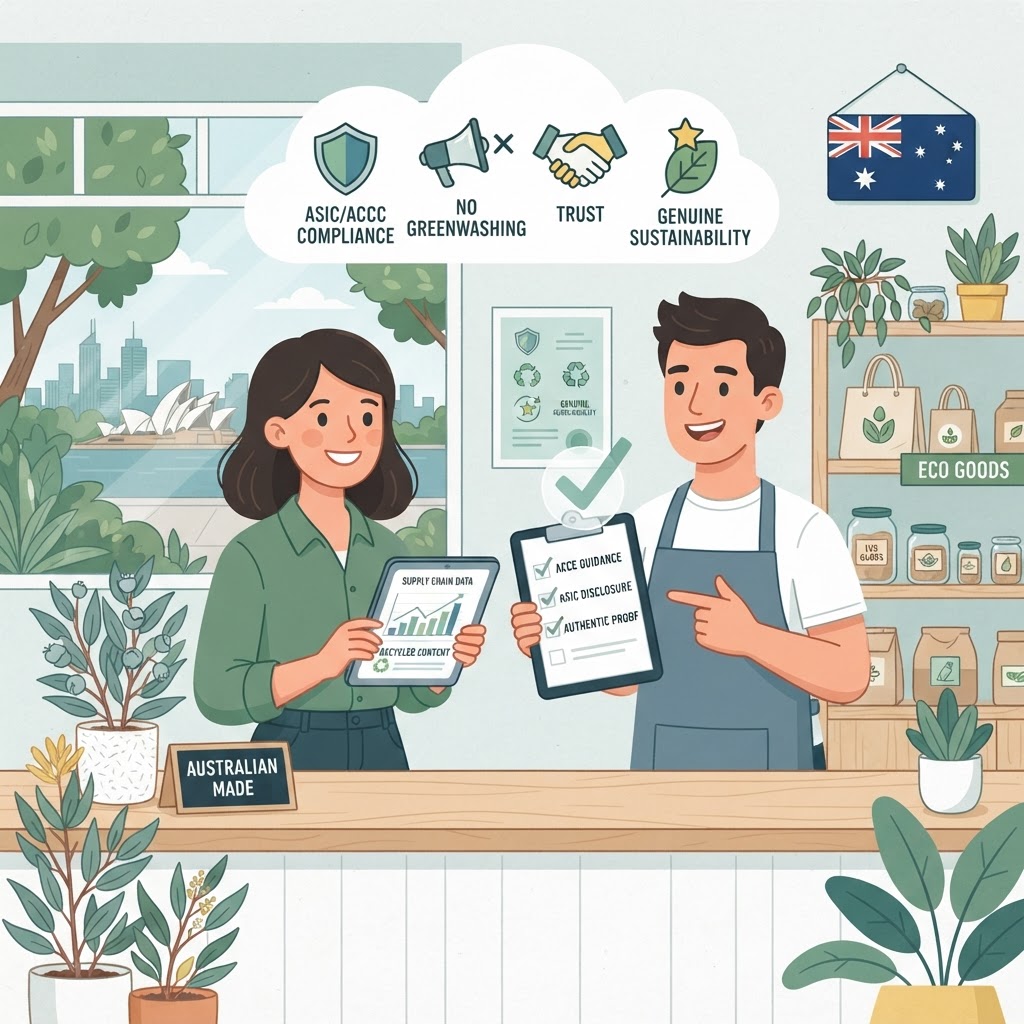
ASIC INFO 271 provides further guidance on how to avoid misleading sustainability claims. By anchoring your reporting to these official Australian standards, you demonstrate that your carbon accounting is not a marketing exercise, but a precise, data-driven discipline. This level of rigor is exactly what enterprise buyers look for when assessing supply chain resilience.

Addressing the Scope 3 Complexity

While Scope 1 and 2 are relatively straightforward to measure, Scope 3 often feels like an impossible task. However, you do not need to track every single paperclip in your supply chain to make progress. Start by identifying the most carbon-intensive areas of your business operations. This might include logistics, raw material procurement, or business travel.

Using a digital platform like ScopeTrack allows SMEs to automate the collection of this data, converting complex invoices and operational inputs into actionable insights. By systematically measuring your upstream and downstream impact, you create a baseline that allows for year-on-year improvements, which is exactly what sophisticated buyers want to see.

Building Trust Through Data Integrity

In the era of increased regulatory scrutiny, the gap between 'good intentions' and 'verifiable data' is where contracts are won or lost. Avoid greenwashing by being transparent about your data limitations. If you are still estimating certain parts of your Scope 3 emissions, document the methodology and your path toward better data collection.

Sustainability is a journey of continuous improvement. By documenting your process—from the initial audit to the application of NGA factors—you build a compelling narrative that stands up to the rigours of procurement audits. Remember, your objective is to provide a clear, evidence-backed account of your carbon impact that aligns with the expectations of the modern Australian market.

Conclusion: Start Your Carbon Accounting Journey Today

Understanding the interplay between Scope 1, 2, and 3 emissions is the first step toward future-proofing your business. By moving from manual spreadsheets to structured, automated carbon accounting, you position your SME to win the sustainability tenders of tomorrow. Visit ScopeTrack today to learn how our platform can help you simplify your reporting and turn your environmental commitment into a competitive advantage.

Frequently asked questions

What is the difference between Scope 1, 2, and 3 emissions for an Australian SME?

Scope 1 refers to direct emissions from sources you own, like your vehicle fleet. Scope 2 covers indirect emissions from purchased electricity, while Scope 3 includes all other indirect value chain emissions, such as purchased goods and waste.
Why do I need to use National Greenhouse Accounts (NGA) factors in my tender?

NGA factors are the official Australian government metrics used to convert business activities into accurate CO2 equivalent data, ensuring your report meets national standards for procurement.
How can I avoid greenwashing when responding to a sustainability tender?

You can avoid greenwashing by providing evidence-based data that follows Australian standards, being transparent about your current measurement methodology, and clearly outlining your roadmap for future improvements.

© 2025 PrimeGreen. Emissions management platform.